35 Years of Gas Data: The technology has changed. Our principles haven’t.
What does it take to last 35 years?
When Gas Data began in 1991, there were just 37 landfill sites that were utilising gas in the UK. Automatic hourly hydrocarbon monitoring was only just beginning. The first meeting for the UN climate convention took place. The lithium-ion battery had just reached the market, and the World Wide Web was released. In the same month as the World Wide Web release, Gas Data Ltd was founded. On August 27, 1991 to be exact. Which means Gas Data Ltd is now part of just 3.48% of companies on the UK register that has reached 35 years of business.
In 2026
54.58%% of companies were 5 years old and over
31.41% of companies were 10 years old and over
12.06% of companies were 20 years old and over
3.48% of companies were 35 years old and over
Looking back, a lot has changed since 1991. We have had to change and adapt with the policy and environmental changes. Some of the most significant shifts include the ATEX directive in 1996, the growth of landfill gas utilisation over 1990 to 2000, the 2008 UK Climate Change Act and the 2019 UK Clean Air Strategy to name just a few.
Our technology has changed, our customer requirements have changed, industries and environmental expectations have changed but Gas Data’s underlying approach has remained the same.
In honor of this huge milestone we wanted to look back at our business to see what’s changed and what hasn’t, as well as look back on the events that affected the industries we supported.
What hasn’t changed?
When looking back through the Gas Data archive, one of our most interesting finds wasn’t a product. It was the language used on our website in 2002 which is one of the very first records of our website. More than two decades later, several of the principles described there are recognisable in how Gas Data operates today.
These principles were:
- Customer-led engineering
- Long-term support
- Technical expertise
- Continual research and development
Customer-led engineering
Gas Data Ltd was founded to design and manufacture gas monitoring and analysis instruments for the landfill industry. In 1991 new environmental legislation was changing what operators needed to measure, creating demand for instrumentation that was not only accurate, but practical and adaptable to individual sites.
In 1991
Landfill methane was primarily a hazard to manage. Gas migration could create explosive atmospheres and affect neighbouring properties, making reliable monitoring an increasing part of managing a site safely. It was however becoming an energy generation asset because in the same year Gas Data Ltd was founded, government policy was changing to promote generating electricity from landfill gas.
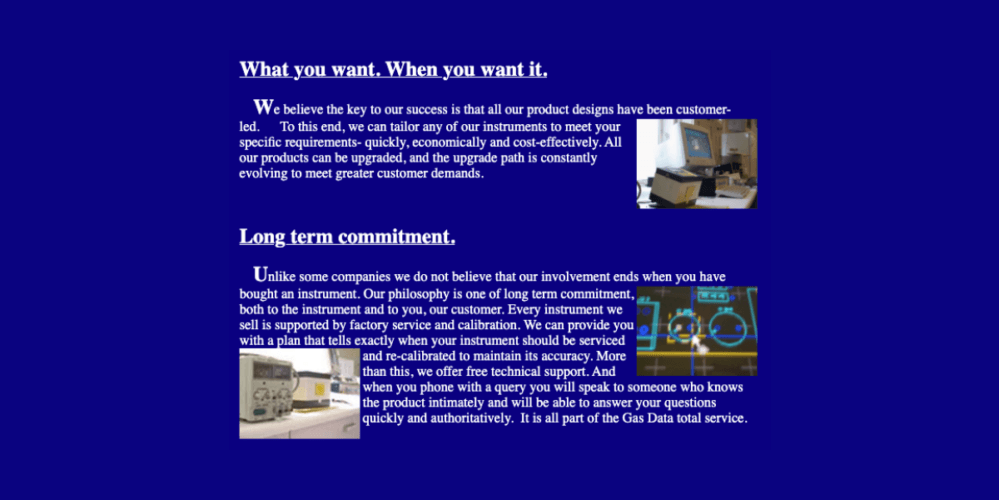
Customer-led engineering was integral to the culture at Gas Data and it’s referenced in our first stored record of the website 24 years ago.
“We believe the key to our success is that all our product designs have been customer-led.”
– Gas Data, 2002
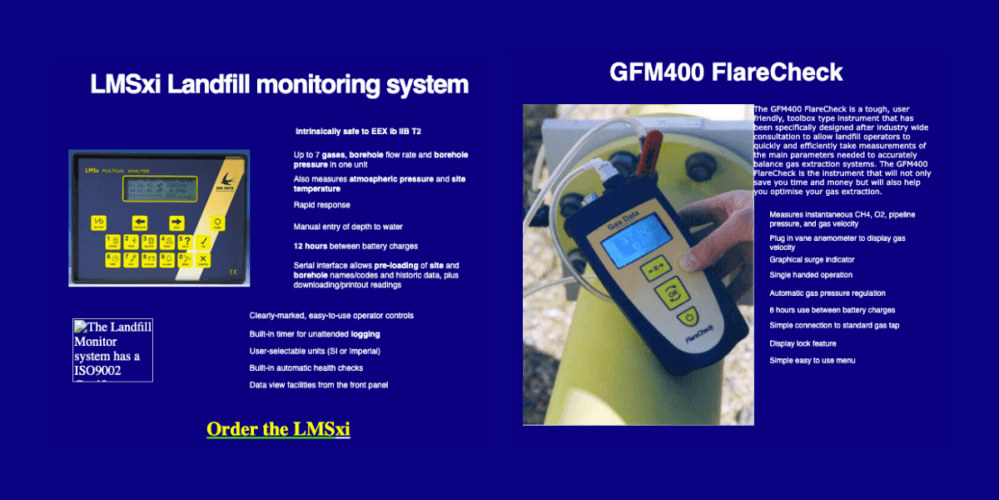
That principle can be traced through generations of Gas Data products. From the early LMS systems and GFM analysers to today’s GM25 range, products have evolved as the requirements of the people using them have changed. Some have developed through several generations; others have been retired as technology, regulations and customer needs moved on.
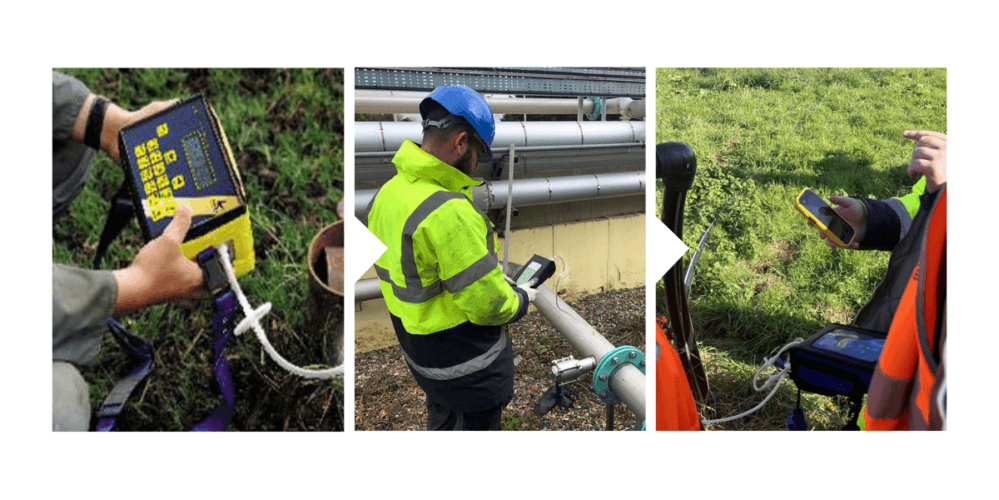
Kabir joined Gas Data in 2001, this was his first job and has since worked across generations of our software, fixed systems and portable gas analysers. He remembers the approach simply.
“If a customer wanted something, we would build it for them. We’d go away and look into it.”
– Kabir, principle software engineer
In the early 2000s, that meant finding new ways for customers to access their Landfill Monitoring System (LMS) data. At the time operators were collecting samples throughout the day, then downloading all the data to a computer. This happened through dial-up, downloading the data overnight so that it was ready for the morning. Thankfully the dial-up era is over!
Another example is from around 2005, when a water company asked for alarms when readings exceeded specified thresholds, this led to configurable alarms in the software and text-message alerts being incorporated. What was once a bespoke request, has gradually become part of what customers expect from connected monitoring equipment.
Other projects were much more specific to an individual application. One customer in Scotland wanted to understand whether wind conditions could influence the impact of odour and H₂S on neighbouring areas. Gas Data adapted a fixed system to connect to a wind-speed monitor, display the information live and gave the customer the tools and training needed to use it.
We asked Kabir, can Gas Data still be described as customer-led?
“It’s still very true. Even today, I’m working on a project I’ve never built before.”
At the time, Kabir was developing a custom Click! fixed gas analyser for a customer’s continuous gas-monitoring requirement in Holland.
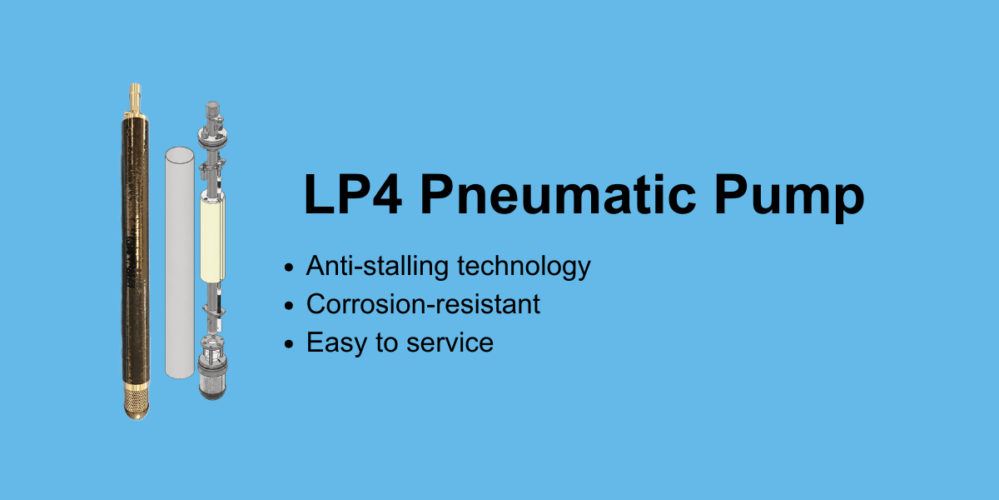
Across the company the same approach continues to influence new product development. Feedback from landfill operators about leachate pumps stalling in difficult conditions contributed to the development of the LP4 pneumatic leachate pump. Then another request, for a more affordable analyser incorporating more gases operators need to measure across internal and external landfill wells, helped shape the GM25-7.
Thirty-five years on, customer-led engineering does not necessarily mean building every request. It means understanding the problems behind it, applying the technical experience accumulated over our previous generations of products, and deciding whether there is a better way to solve it.
That combination of listening, engineering and learning over the long term brings us onto another principle that has remained important throughout Gas Data’s history. Supporting the equipment and people after the initial sale.
Long-term support
In 2026 these long-term support statements still describe how we support our customers today.
“We do not believe that our involvement ends when you have bought an instrument.”
– Gas Data, 2002“When you phone with a query you will speak to someone who knows the product intimately.”
– Gas Data, 2002
For us, the value of a gas analyser is not only how it performs on day one. It is how reliably it continues to perform throughout its working life, how quickly problems can be resolved and whether it can be serviced, calibrated and repaired when needed. This is particularly important in the demanding environments our instruments are designed for, where equipment downtime can have operational and financial consequences.
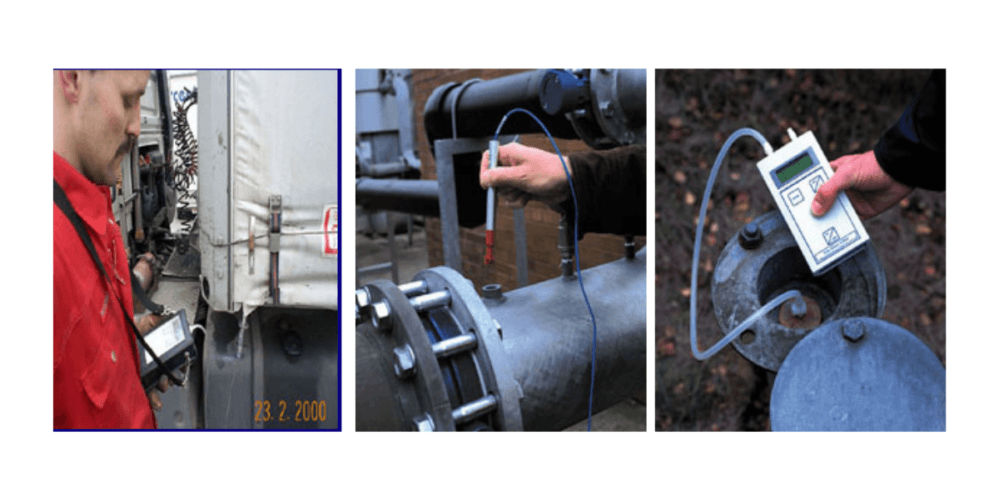
Today, instruments return to us for routine servicing, calibration and repair. Keeping this expertise in-house means that when a customer has a question they are dealing with people who understand how the product was designed, built and tested as well as how it behaves after years of use in the field.
Adrian, our Service Coordinator, joined Gas Data in 2010, originally in the Quality Assurance department. Since then, he has worked across multiple areas of the business, building an in-depth knowledge of our products and bringing that experience from quality control into his current service role.
What has changed is the support we can provide around the instrument itself. Annual service and maintenance plans can provide replacement equipment while an analyser is being repaired, helping customers minimize downtime, while our rental fleet gives customers another way to keep monitoring when additional or temporary equipment is needed.
The support options have evolved. Our culture has stayed the same and we are here to support our instruments throughout their working life.
Technical expertise
Gas Data began with specialist knowledge in sensors, instrumentation and optical measurement. That early expertise led to two DTI SMART Awards in 1994 and 1995, followed by collaboration with Coventry University on miniaturised gas-detection technology in 2000/2001.
What has changed is the breadth of that expertise. In 1991, Gas Data’s early applications included landfill and hidden person/stowaway detection. Today, our experience extends across biogas, syngas, landfill, wastewater, oil and gas and other environmental applications. The addition of AQMesh in 2026 has broadened that expertise further, bringing more than a decade of specialist air quality monitoring knowledge into Gas Data.
Our senior technical colleagues bring 20+ years of experience across gas analysis and air quality monitoring, building on knowledge accumulated throughout the years.
What hasn’t changed is the focus on applying that technical knowledge to practical problems. That expertise is not limited to developing products. We also apply it to the way we manufacture, calibrate and support them. Gas Data has, for example in 2026, introduced automated calibration processes for fixed gas analysers to improve team efficiency and reduce service times, with plans to extend the approach to further product lines.
The experience built up over 35 years gives us a strong base to work from, it also helps to shape what we look at next. New technologies, changing regulations and new customer requirements continue to create challenges to solve, which is where research and development comes in.
Continual research and development
“Dedication to Research and Development”
Gas Data, 2002
That dedication remains part of Gas Data today. What we research, develop and build has changed considerably over 35 years.
The progression of our products tells some of that story. LMS systems developed into the GFM range, and later the GM25 series. Siteman software, once used to download and manage data from LMS systems, has been succeeded by DataField GM25 Connect. Along the way, sensing technology has advanced, portable instruments have become more capable. Expectations around data logging, connectivity and usability have changed significantly too.
In our 35th anniversary year, that development continues with two new products for the landfill industry. The LP4 Pneumatic Leachate Pump and the GM25-7. Both build on decades of experience working with landfill operators and understanding the conditions equipment needs to perform in.
The technologies and possibilities available to our engineers will continue to change. What remains consistent is our ambition to explore them. Our goal is to continue to find practical ways to make measurement, monitoring and day-to-day operation better for the people using our equipment.